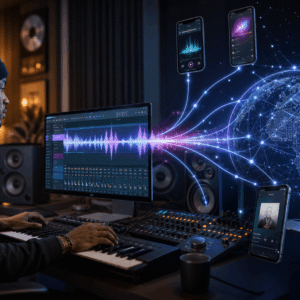

Every day, thousands of new songs are uploaded to streaming platforms around the world. Yet many independent artists still wonder how music actually reaches services like Spotify, Apple Music, YouTube Music, Amazon Music, JioSaavn, Gaana, and dozens of other platforms.
The answer is digital music distribution.
Whether you’re releasing your first single or managing a growing catalog, understanding digital distribution is one of the most important steps in building a sustainable music career.
This guide explains how digital music distribution works, why it matters, and what you should know before releasing your next track.
What is Digital Music Distribution?
Digital music distribution is the process of delivering your music to online streaming and download platforms.
Instead of sending songs individually to every platform, artists work with a digital music distributor. The distributor handles delivery, metadata, updates, royalty reporting, and payments according to its service model.
Why Do You Need a Music Distributor?
Without a distributor, your music generally cannot be published on major streaming platforms.
A distributor helps you:
- Release music worldwide.
- Deliver tracks to multiple streaming services from a single upload.
- Manage metadata such as artist names, release dates, ISRCs, and artwork.
- Collect royalties based on the distributor’s reporting and payout structure.
- Update or remove releases when necessary.
How Does Music Distribution Work?
The process usually follows these steps:
- Create your music.
- Prepare cover artwork.
- Add song information and metadata.
- Upload everything to a distributor.
- The distributor reviews the release.
- Approved releases are delivered to streaming platforms.
- Your music becomes available to listeners around the world.
Benefits of Digital Distribution
Reach a Global Audience
Your music becomes accessible in countries around the world without requiring separate agreements for each platform.
Save Time
One upload can reach many streaming services, making releases easier to manage.
Maintain Your Catalog
Many distributors allow you to update artwork, metadata, or release information after publication, depending on their policies.
Performance Insights
Most distributors provide dashboards showing streams, downloads, territories, and revenue reports.
Common Mistakes Beginners Make
Many artists encounter avoidable issues when releasing music. Common examples include:
- Uploading low-resolution cover artwork.
- Entering incorrect artist names or metadata.
- Choosing a release date that’s too soon.
- Ignoring copyright ownership.
- Using unofficial samples or beats without permission.
- Failing to promote the release after it goes live.
Taking time to prepare your release properly can prevent delays and reduce the need for corrections later.
Key Takeaways
- Digital music distribution makes your music available on major streaming platforms.
- A distributor manages delivery and release information.
- Good metadata and preparation help avoid publishing issues.
- Distribution is only one part of a successful release. Promotion and audience building are equally important.
Can I upload directly to Spotify?
Spotify does not generally accept direct uploads from most artists. Music is typically delivered through a digital distributor.
Do distributors own my music?
Ownership depends on your agreement. Always read the distributor’s terms before releasing music.
How long does distribution take?
Processing times vary between distributors and platforms. Planning your release in advance helps ensure your music goes live on your preferred date.
Can I change distributors later?
In many cases, yes. However, moving releases between distributors requires careful handling to preserve metadata and avoid duplicate releases.
Final Thoughts
Digital music distribution has made it easier than ever for independent artists to share their music with listeners worldwide. While distribution is an essential part of releasing music, long-term success also depends on quality recordings, consistent promotion, audience engagement, and a clear release strategy.
By understanding how distribution works before you publish your music, you’ll be better prepared to make informed decisions and build a stronger foundation for your catalog.
Ready to Release Your Music?
Whether you’re launching your first single or managing an expanding catalog, 31 Strings aims to provide educational resources and practical guidance for independent artists. Explore more articles, creator tools, and music industry insights to support your next release.